Compressor racks ↗
A compressor plant can be evaluated as the refrigeration source for the process load and operating regime.
 ES
ICESQUARE / APPLICATIONS
Refrigeration systems for tunnels, spirals and blast freezers, designed around the product and production throughput.
Ask the assistant ↗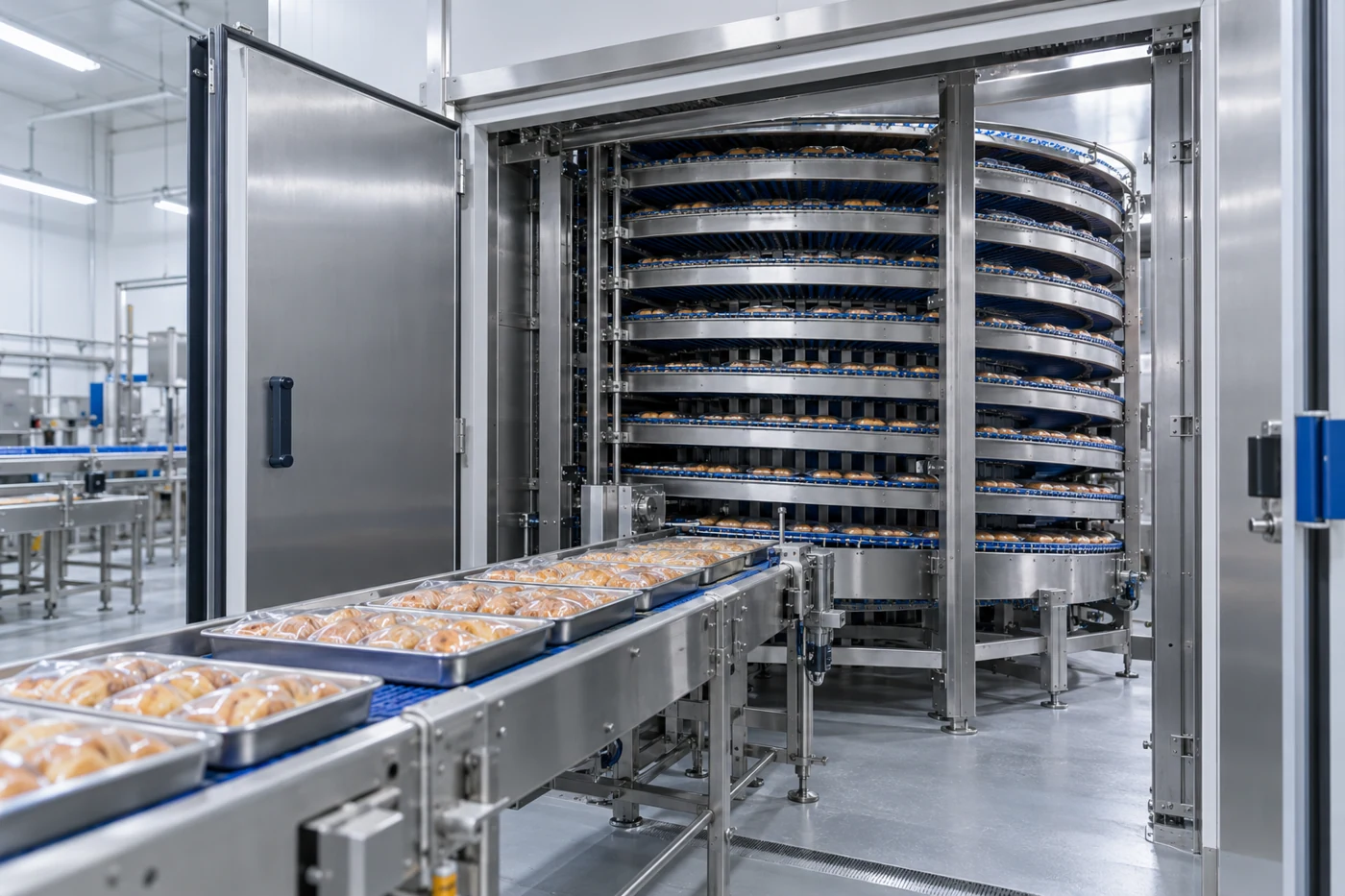
Freezing requires heat removal from the product, including the heat associated with water changing phase. In forced-air systems, an evaporator cools the air and fans move it over the product. Exposure time and product core temperature are part of the study.
Product form, size, packaging and inlet temperature determine the requirement.
Evaluate a tunnel, spiral or batch blast freezer according to production needs.
Calculate the cooling source for the process and its operating time.
A compressor plant can be evaluated as the refrigeration source for the process load and operating regime.
A semi-industrial alternative to evaluate based on project size, conditions and operations.
An NH₃ / CO₂ cascade is an architecture to consider for industrial low-temperature requirements.
First define kilograms per hour or per batch and freezing time. A tunnel or spiral can integrate with continuous production; a batch blast freezer follows loading and unloading cycles.
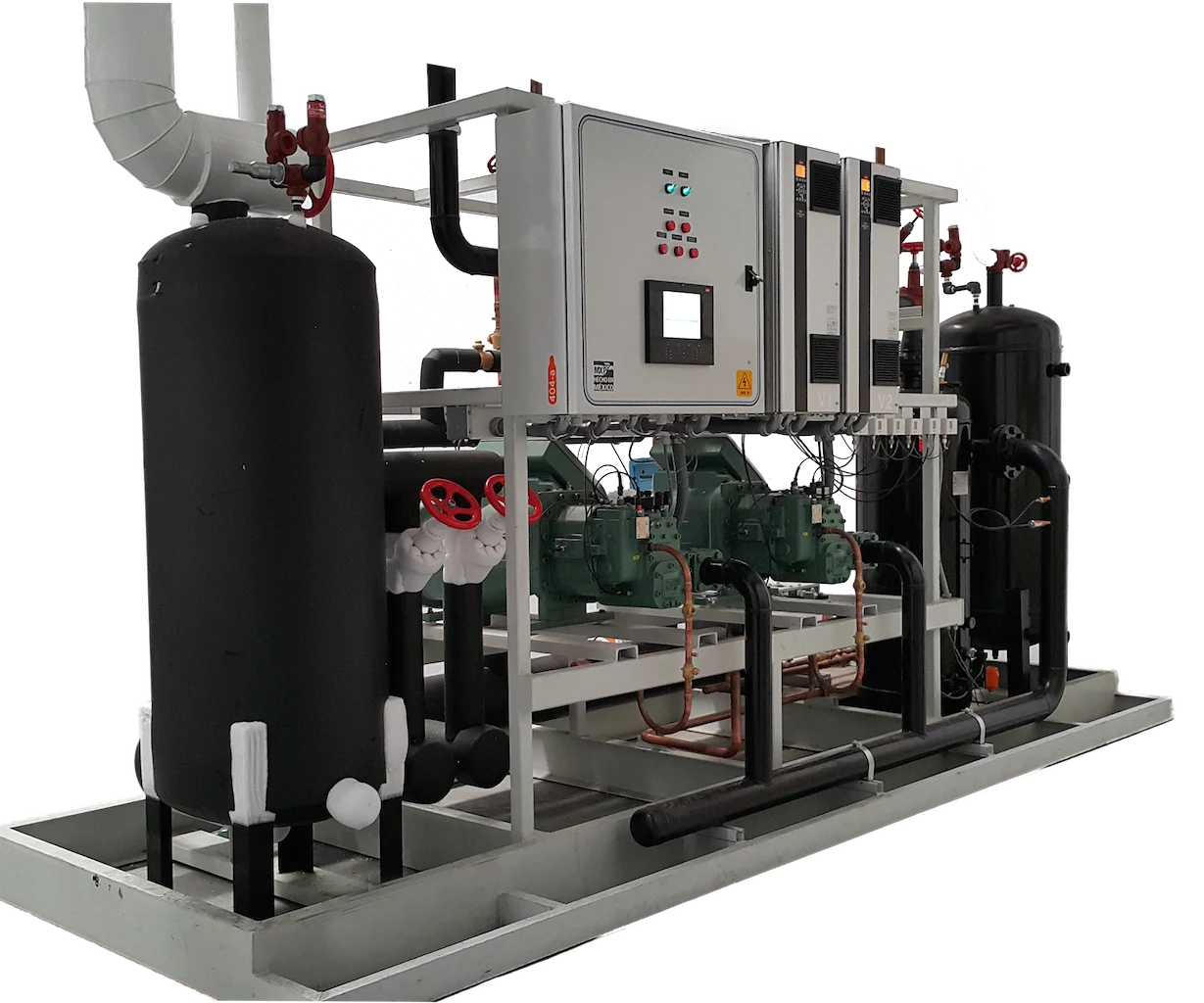
IS RACK
Parallel compressor systems for commercial and industrial refrigeration. We manufacture racks using conventional refrigerants, with configurations defined for each application.
View technical information ↗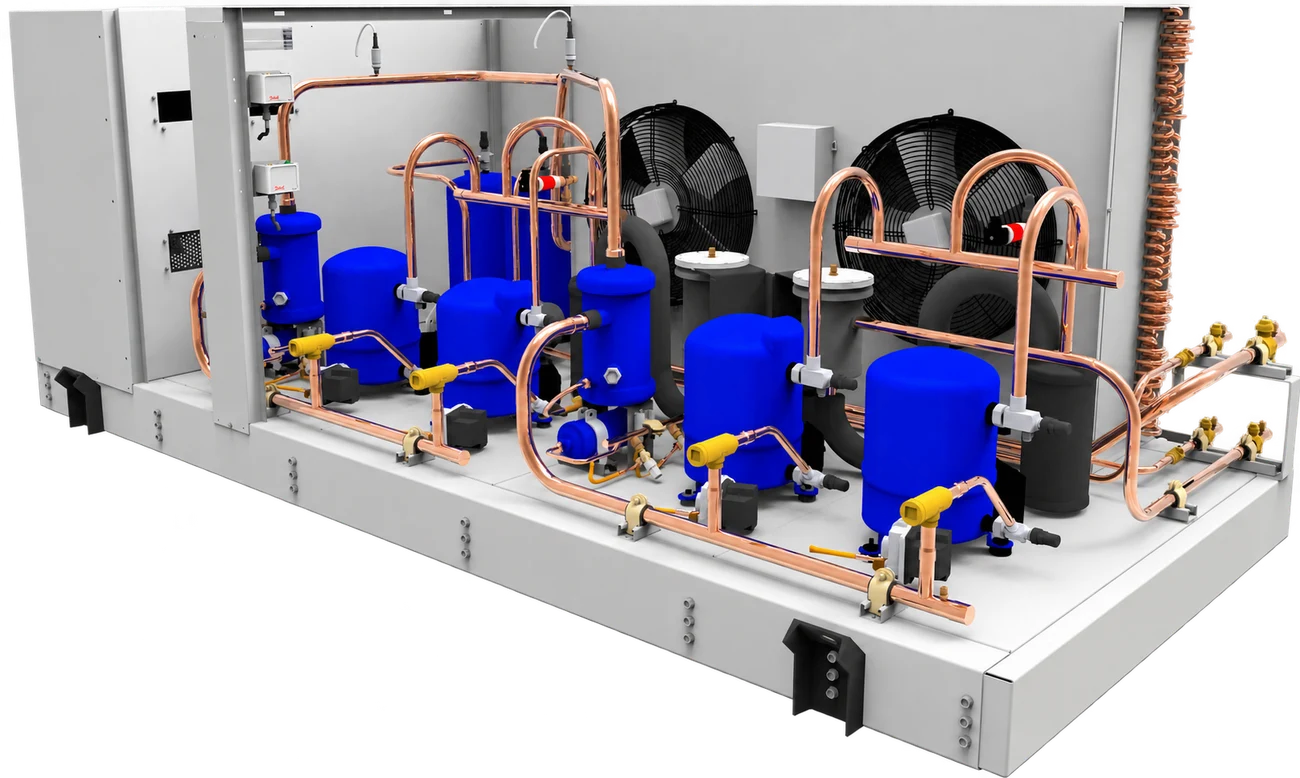
IS BLOCK
Equipment for heavy commercial and semi-industrial applications, integrating compressors and controls to meet project needs.
View technical information ↗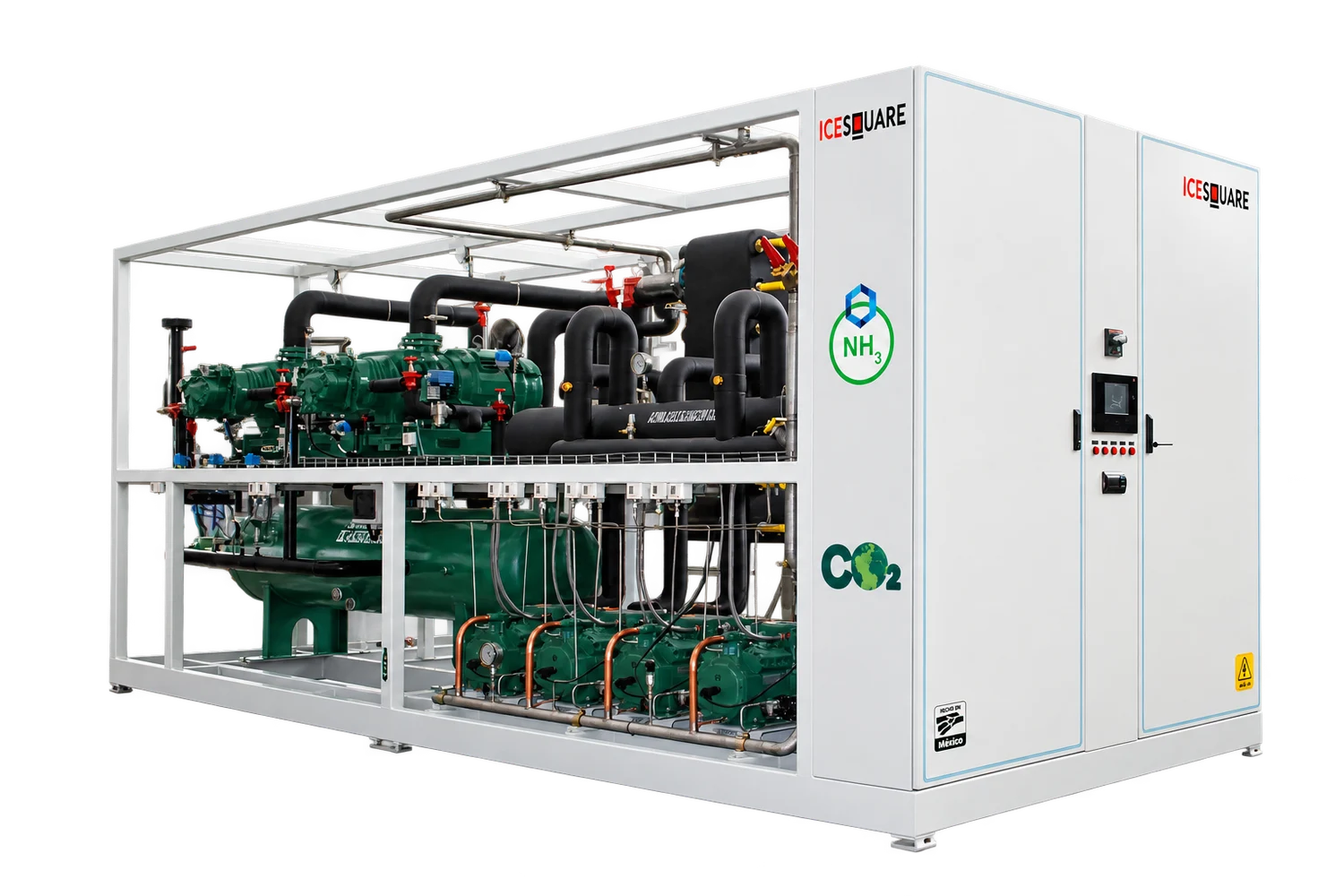
CONFIGURATION
We manufacture ammonia and CO₂ cascade systems for industrial refrigeration. We integrate both circuits into a solution defined around the process and project conditions.
View technical information ↗